
Growing up in the 1980s and early ’90s, my world was built on four tiny wheels. Hot Wheels and Matchbox cars weren’t just toys. They were the backbone of childhood adventure, the vehicles of imagination, and the reason my knees were always scuffed from crawling across the carpet in pursuit of the perfect race. While both brands had their own charm, it was the Matchbox side of things that held a special place in my heart. Their cars had a certain grit, a working-class feel, like they belonged in the real world I saw out the window.

One of my absolute favorites was the Matchbox Super Spin Car Wash. After a long day of racing through the dirt hills behind our house, my fleet of cars looked like they’d survived a demolition derby. That car wash was a marvel. You’d crank the handle and send your car through a tunnel of foam rollers, real water jets, and a spinning dry cycle that made you feel like you were running a full-service operation. I’d line up my cars like they were waiting for their turn at the local garage, each one getting the royal treatment before being tucked away for the night.

Then there were the Days of Thunder cars from Hardee’s. In 1990, when the movie hit theaters, it was like NASCAR had been injected with Hollywood adrenaline. Tom Cruise was behind the wheel, and suddenly stock cars were cool. Hardee’s offered a set of five replica cars from the film, and I collected every one. I’d reenact scenes from the movie in my living room, complete with dramatic crashes and last-lap heroics. Those cars weren’t just promotional tie-ins. They were cinematic icons in miniature form.

Another gem in my collection came from a short-lived TV show called Code Red. It aired in 1981 and starred Lorne Greene as the patriarch of a firefighting family in Los Angeles. The show didn’t last long, but Matchbox released a full line of vehicles based on it. There were fire trucks, ambulances, a fireboat, a helicopter, even the Chief’s car. My dad was a fireman, so this set hit close to home. I’d stage elaborate rescue missions across the living room, complete with siren noises and dramatic rescues from imaginary infernos.
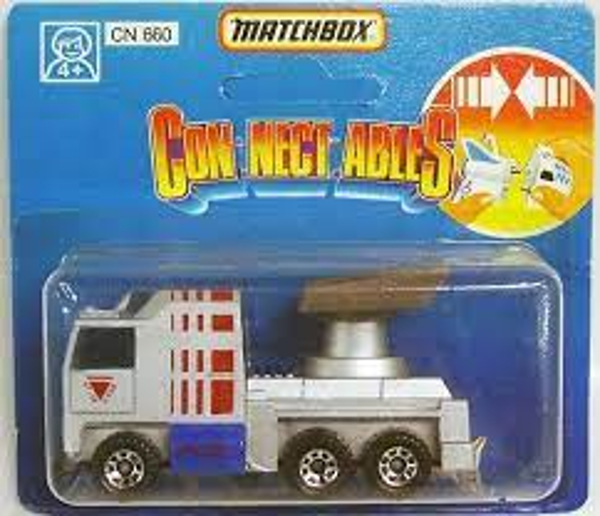
Matchbox also gave us the Connectables line, which felt like a revelation. Each car came in pieces that snapped together, allowing you to mix and match parts to create wild new vehicles. I built dragsters with tank treads, limousines with rocket boosters, and rigs that looked like they belonged in a Mad Max sequel. The possibilities were endless, and my imagination ran wild. It was like being a mechanic, inventor, and stunt driver all at once.

And then there were the Matchbox trains. Released in the early ’80s, they weren’t quite to scale with the cars, but that didn’t matter. There were engines, boxcars, passenger cars, and cabooses, all ready to be linked together in endless combinations. My brother and I would build imaginary tracks through the house, winding around furniture and under tables. We’d spend hours conducting our own rail empire, complete with cargo deliveries and whistle stops.
Looking back, those Matchbox toys weren’t just plastic and paint. They were portals to other worlds, tools of storytelling, and companions on rainy afternoons. They taught me about creativity, about building something from nothing, and about the joy of play for play’s sake. They may have been small, but the memories they created were anything but.
Discover more from Retro Ramblings
Subscribe to get the latest posts sent to your email.
I think I had some of those Days of Thunder cars from Hardee’s. In fact, I know I had the orange one. Might have had the Mello Yello one as well?
Sadly, I don’t think I still have them. =(